|
| | 1750-1799 | 2 |
| | 1800-1849 | 11 |
| | 1850-1899 | 57 |
| | 1900-1949 | 64 |
| | 1950-1979 | 20 |
| | 1980-2010 | 5 |
| | Total | 159 |
 Many people wonder why we cannot identify, at the level of species, a large percentage of the micromoths that we photograph or collect. This paper is an attempt to explain the problem using as an example the Coleophora, sole genus in the Coleophoridae. The table at right shows the number of species of North American coleophorids described in each half century since the 1700s. The break at 1979 takes us through the period covered by the 1983 MONA checklist. Since that time only five new species have been added to the list in the period 1993-2005 by Jean-François Landry and a co-author. Most of the additions from 1914-1925 were by Annette Braun, and from 1926-1961 by James McDunnough. There simply have not been many researchers interested in describing new species in this family. Our checklist now stands at 159 described species. But that is not the total of known species. All museums containing large collections of lepidoptera have many drawers full of undescribed material. They sit there waiting for some researcher to come along and examine thousands of unnamed specimens.
Jean-François Landry curates micromoths at the Canadian National Collection in Ottawa. He has submitted for DNA Barcoding almost all of the currently described species. In addition, he has obtained barcodes from a mass of undescribed material. After barcoding data are computerized software can arrange the results in groupings by species, whether described or undescribed, based on the "genetic distance" between specimens. The software determined that there are somewhat more than 300 undescribed species of coleophorid moths. This tells us that more than two-thirds of collected specimens, or moths that are photographed, will fall among the undescribed material.
That is not the whole story. The degree of sampling of coleophorid populations has not been uniform throughout North America. In no place can the sampling be considered to have been complete. Many areas have been relatively uncollected. We can see in photo archives at BugGuide and MPG distinctively marked specimens that are almost certainly not found among the described or undescribed material mentioned above. It should shock no one to suggest that there are likely another 100-200 species "out there." If this is roughly true, then there might be a North American population of about 650+ coleophorid species of which only about one-fourth have been described, suggesting that one could find matches for about one-fourth of our specimens or photographs.
|
|
Coleophora Species Groups
|
|
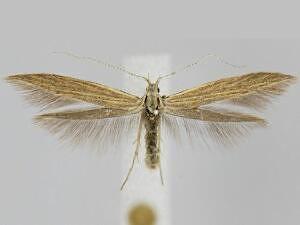
But, alas, we can't do even that well because many of the described and undescribed species are look-alikes. They cannot be identified to species solely on the basis of a photograph. They might be assigned to a "photographic species group" containing anywhere from a few to dozens of species.
The photographs that follow are of five different species that look much like each other. We can probably find another 50 species with similar forewing patterns. Unless one of these moths is identified by genitalia or DNA we can't know to which species it belongs. We might as well call it Coleophora sp. grp. #1 or Brown-streaked Coleophora sp. or C. cratipennella species group. It might not be a good idea to call it C. cratipennella sp. grp. because that might imply a close relationship of all the group members with C. cratipennella when that probably would not be the case.
We will prepare a series of grouped species pages to show the major grouping in this family.
|
|
|
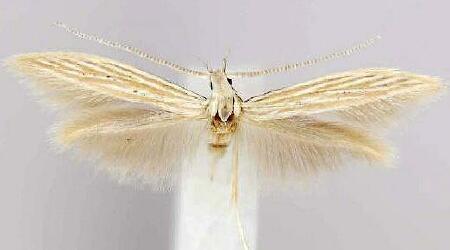 1396.1 - Coleophora xyridella - BOLD DNA
|
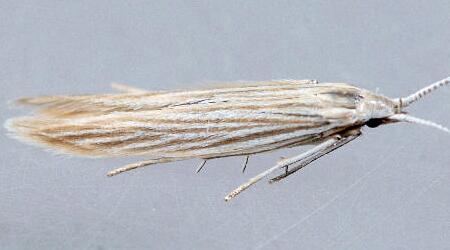 Mark Dreiling - Oklahoma - 1365 - Coleophora cratipennella - BOLD DNA
|
|
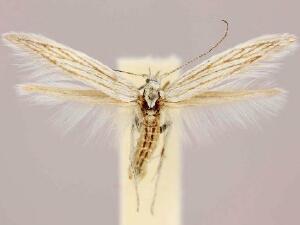 JFL108 - Western USA and Canada
|
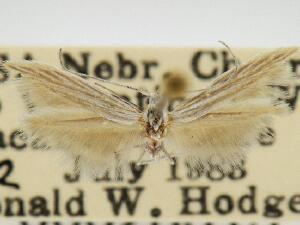 JFL071 - Central USA
|
 BOLD - 1266 - Coleophora asterophagella
|
|
|
Sniffing Out Species Using DNA
|
|
Staring at a collection of hundreds or thousands of specimens, many of them in badly worn condition, it is virtually impossible to decide which are new species and which are not. There are simply too many look-alikes. The best one can do is to sort them roughly into a dozen or so groupings based on coloration and patterns of markings. The same is true for photographs of Coleophora moths. The traditional method of determining new species has been to do a very large batch of genitalic dissections under a microscope. A skilled worked might do 10 preparations in a day, while a thousand or more preps may need to be done. Then, after the genitalia have been carefully mounted on slides the study of them begins with the aim of discovering unique or "taxa specific" features. It might take many months or years to study the genetalia of a family such as Coleophoridae and to prepare a dichotomous key that can then guide others versed in the technical language of genitalia to properly determine the species represented by a specimen of interest.
[.....Insert small example of a key, or link to an example.....]
Nowadays, the barcoding method of DNA analysis can be used to eliminate much of this work. One leg of each specimen is placed in a 95-unit compartmented tray and given to a robot. I'm not kidding about the robot, a very special computer-driven machine (one of several) at the BOLD barcoding facility at the University of Guelph in Ontario. The robot can process the DNA of 95 specimens and deliver the results into a databank while our coleophorid researcher is contemplating his next step in the project, answers emails and goes on coffee break. When the computers at Guelph are finished with these hundreds or thousands of specimens it prepares a phylogenetic "tree" showing the most probable relationships between and among all those specimens. Neatly grouped together by similarity of DNA are dozens or hundreds of species (already described ones as well as heretofore undescribed ones).
[.....Insert small example of a tree, or link to an example.....]
| | DNA
Tests | Species
Found |
| | 1 | 30 |
| | 2-5 | 51 |
| | 6-10 | 35 |
| | 11-20 | 38 |
| | > 20 | 28 |
| | 1,977 | 182 |
Jean-François Landry submitted, along with many specimens from known species, 1,977 specimens whose DNA sorted among unknown species groups. The table at right summarizes the results from these 1,977 specimens, resulting in a total of 182 undescribed new species. There was but one specimen for each of 30 of those new species, 2-5 specimens for each of the next 51 species and so forth. There were 62 specimens assigned to the most-frequently encountered new species.
Many additional specimens have now had their DNA tested and the table will need to be updated to show the results for more than 300 new species. To be perfectly clear about the process, not every new species flagged by the computers results in a bona fide new species. Landry's lab is now looking at genitalia from each of the computer-designated species to make sure that they really do represent new species. In a small percentage of cases two "computer species" end up being combined into a single species to be described in a future monograph.
|
|
| |